The following are proposed community benefits to be costed, legally structured and consulted on before any binding offer is made.
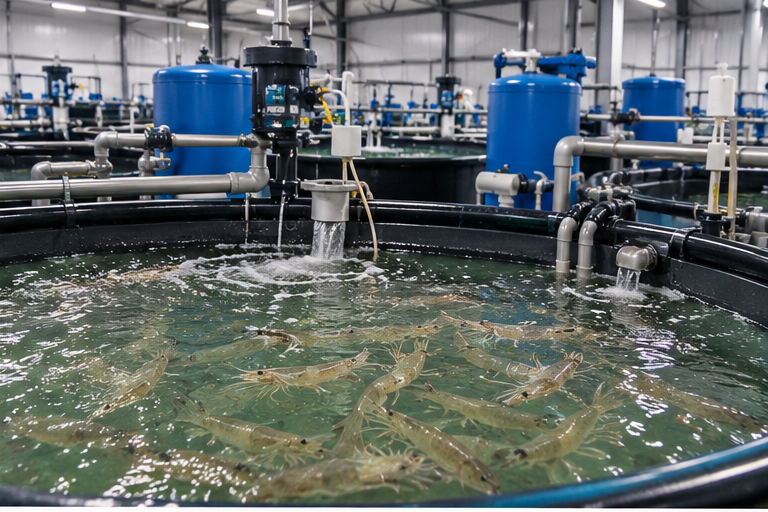
The target is year-round vegetables, fruit and recirculating-aquaculture seafood using recovered server heat, renewable electricity and aggressively recycled water.
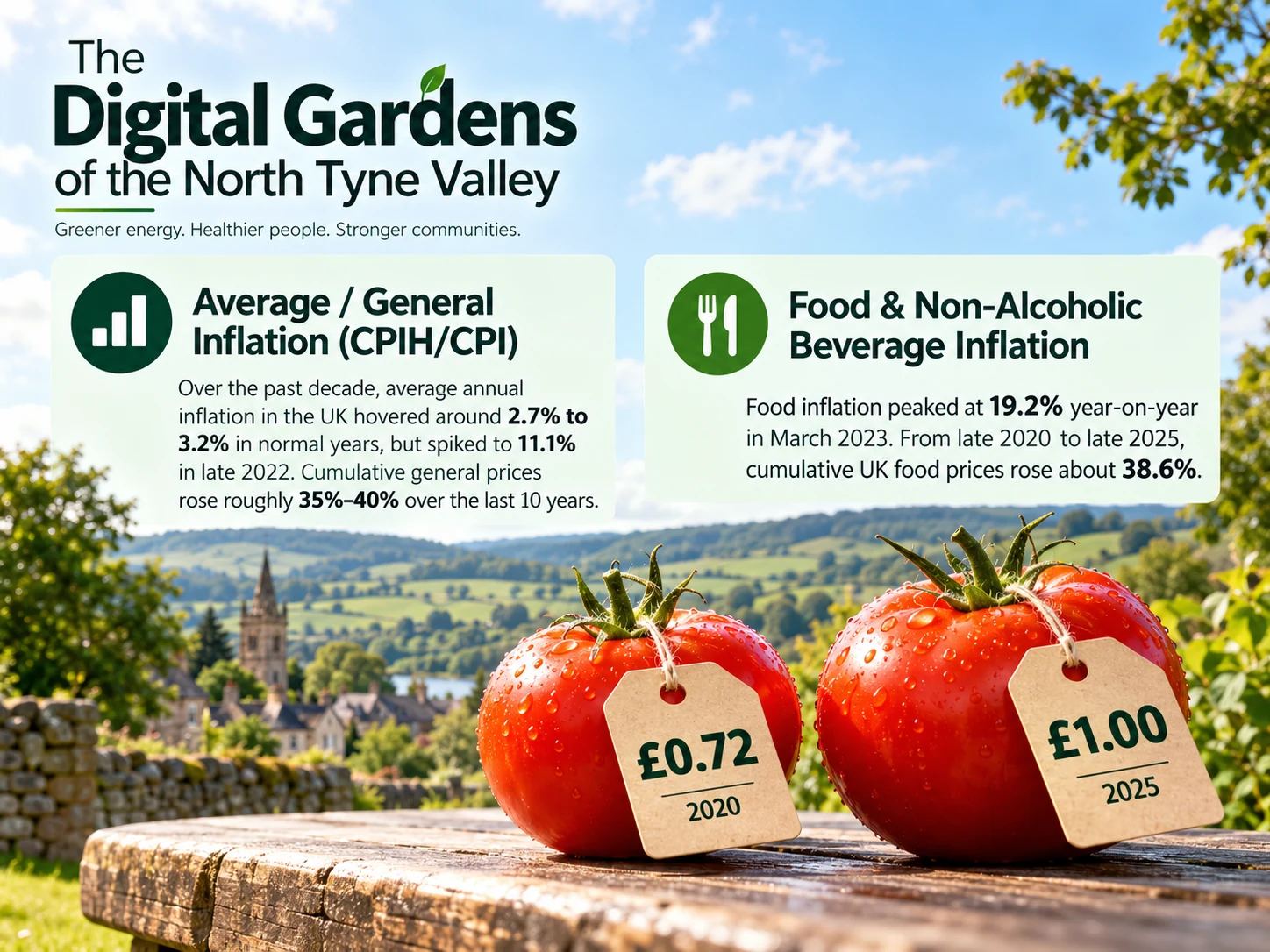
Average / General Inflation (CPIH/CPI): Over the past decade, average annual inflation in the UK hovered around 2.7% to 3.2% in normal years, though it spiked sharply to a 41-year high of 11.1% in late 2022. Cumulatively, general prices have risen roughly 35%–40% over the last 10 years. UK Parliament briefing; UK cost-of-living briefing.
Overall Food & Non-Alcoholic Beverage Inflation: Food-price inflation peaked at 19.2% year-on-year in March 2023. Between late 2020 and late 2025, cumulative UK food prices rose by about 38.6%, and food prices have risen more than 30%–37% since the pandemic/post-2022 baseline. Food Foundation; ONS; Food and Drink Federation.
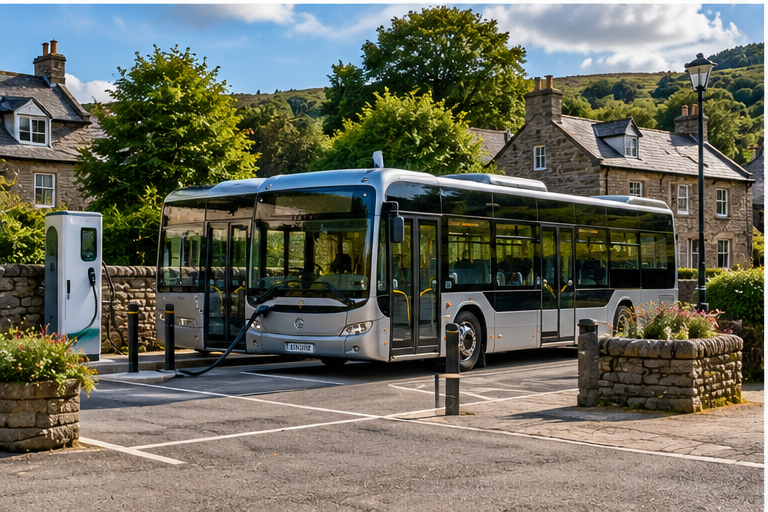
The concept includes community EV access, charging, a village bus and support for replacing fossil-fuel journeys. The final ownership model must comply with UK tax, insurance, consumer and charity/co-operative law.
Any long-term vehicle benefit would be written transparently into the final community structure rather than advertised as guaranteed before financing and legal review.
Earlier continental versions of the model used euro-denominated estimates. This UK version uses pounds sterling and will be recalculated with British energy, vehicle, insurance, tax and household-cost inputs before any binding benefit level is proposed.
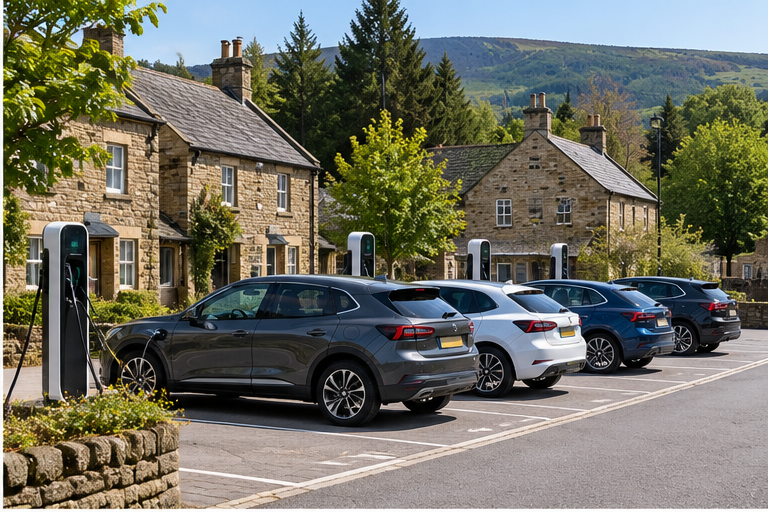
Charging hubs would be co-located with project sites and community facilities where grid and planning conditions allow.
An electric bus would connect the six corridor municipalities for residents, workers and visitors.
A certified electric aircraft could support surveying, media, training and infrastructure inspection if a suitable operating base, permissions and operating economics are established.

Participation would be voluntary. The project must distinguish clearly between universal public infrastructure and benefits tied to any future community covenant.
Open meetings in each community with the technical, financial and legal documents available in plain language.
A UK-qualified solicitor reviews the proposed covenant and resident protections before anyone is asked to sign.
No pressure signing. Residents receive time to read, question and compare the proposal.
Any land, covenant, co-operative or benefit agreement would be executed using the legally appropriate UK process.
Nothing on this page is a binding offer. Benefits depend on financing, planning, grid connection, water/environmental permissions and the final legal structure.