The proposal couples liquid-cooled data centres with greenhouses, recirculating aquaculture and agricultural processing so that energy paid for once can do more than one job.
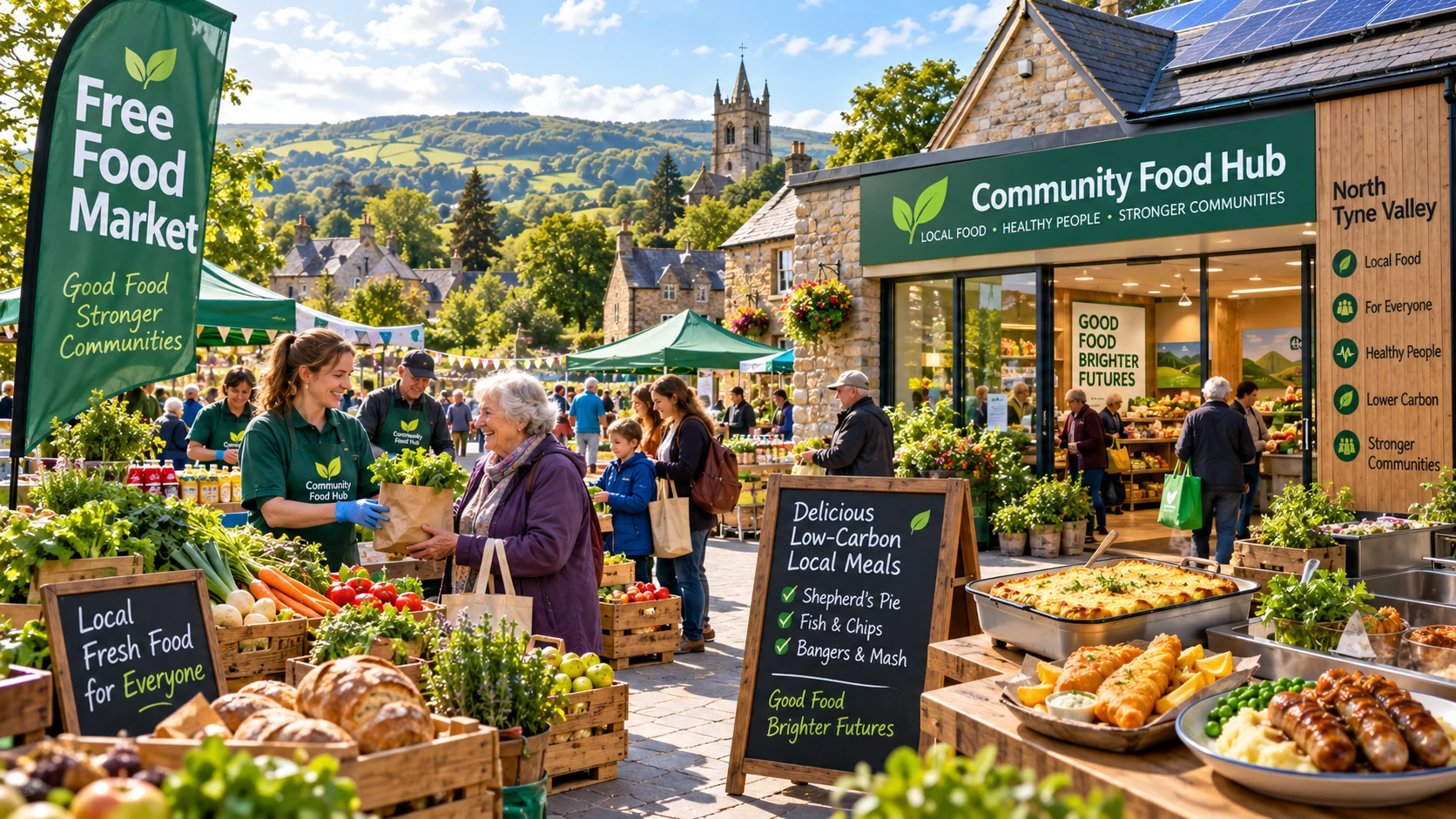
The food programme is not limited to raw produce. The concept includes familiar British meals such as Shepherd's Pie, Fish & Chips and Bangers & Mash made with local ingredients, renewable energy, recovered heat and lower-carbon supply chains wherever practical.
Server heat can maintain greenhouse root zones, warm aquaculture water, pre-heat wash water and support low-temperature crop drying. Thermal storage helps match continuous computing with seasonal farming demand.
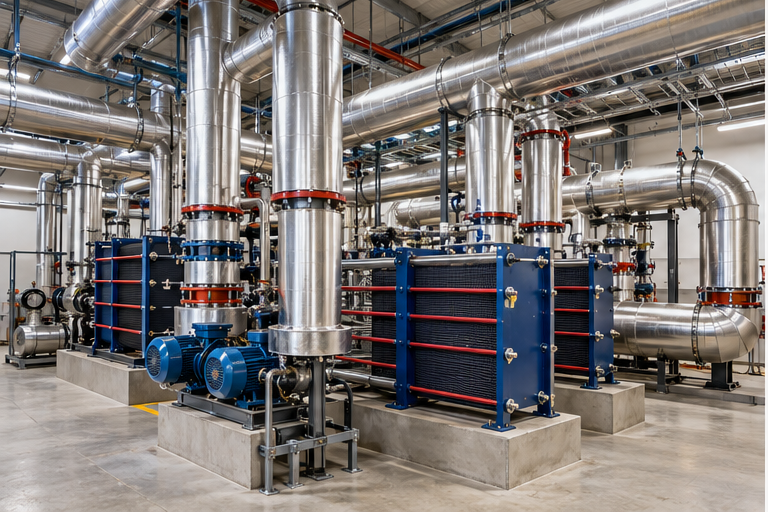
Concept image — proposed heat-recovery equipment.

Hydroponic and soil-based production could supply tomatoes, salads, herbs, berries and other crops while reducing imports and making northern food production less weather-dependent.
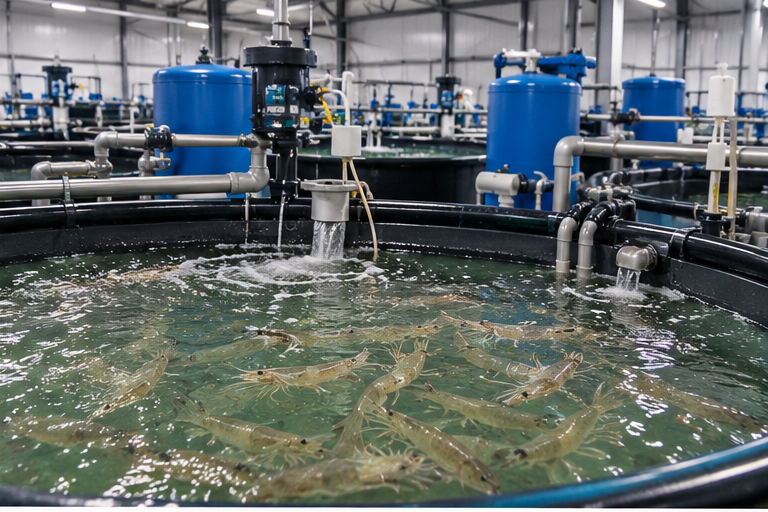
High-recirculation RAS can raise prawns and suitable fish with far less make-up water than flow-through systems. Species, fish-health, discharge and food-safety approvals would be obtained before operation.
The project is designed to buy grain, forage and services locally, provide useful-heat drying where viable and create new routes to market rather than displacing existing farms and shops.
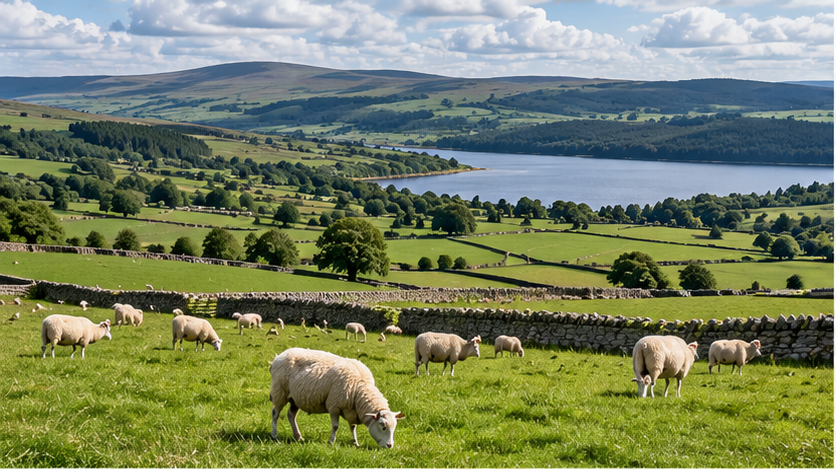
For North Tyne specifically, the local-farm base is assumed to be sheep, beef cattle and grass-based forage — pasture, clover-rich leys, hay and silage. Cereals and other crops are concentrated on better ground, while wider Northumberland partners can add dairy, eggs, potatoes, roots and seasonal vegetables. Lucerne is optional, not the default.
Explore local farmersThe goal is lifecycle-zero or better, not a marketing slogan. Electricity, construction, feed, fertiliser, refrigerants, transport and embodied carbon must be measured and independently reported before the label is used as a verified claim.