Most of the fleet is electric, but some vehicles — and almost all farm machinery — still need a fuel tank. The project solves this without a drop of fossil fuel.
Plug-in hybrids with 40 km or more of electric range refuel with a renewable petrol that is chemically and mechanically identical to conventional fuel — no engine modification required. It's made from agricultural and forestry residues and used cooking oils.

A biogas plant fed by manure and crop residue produces fuel for tractors and heavy machinery, plus piped biogas delivered directly to every home and farm in the village — nobody uses bottled gas. Residents have the option of gas or receiving a new electric stove and oven.
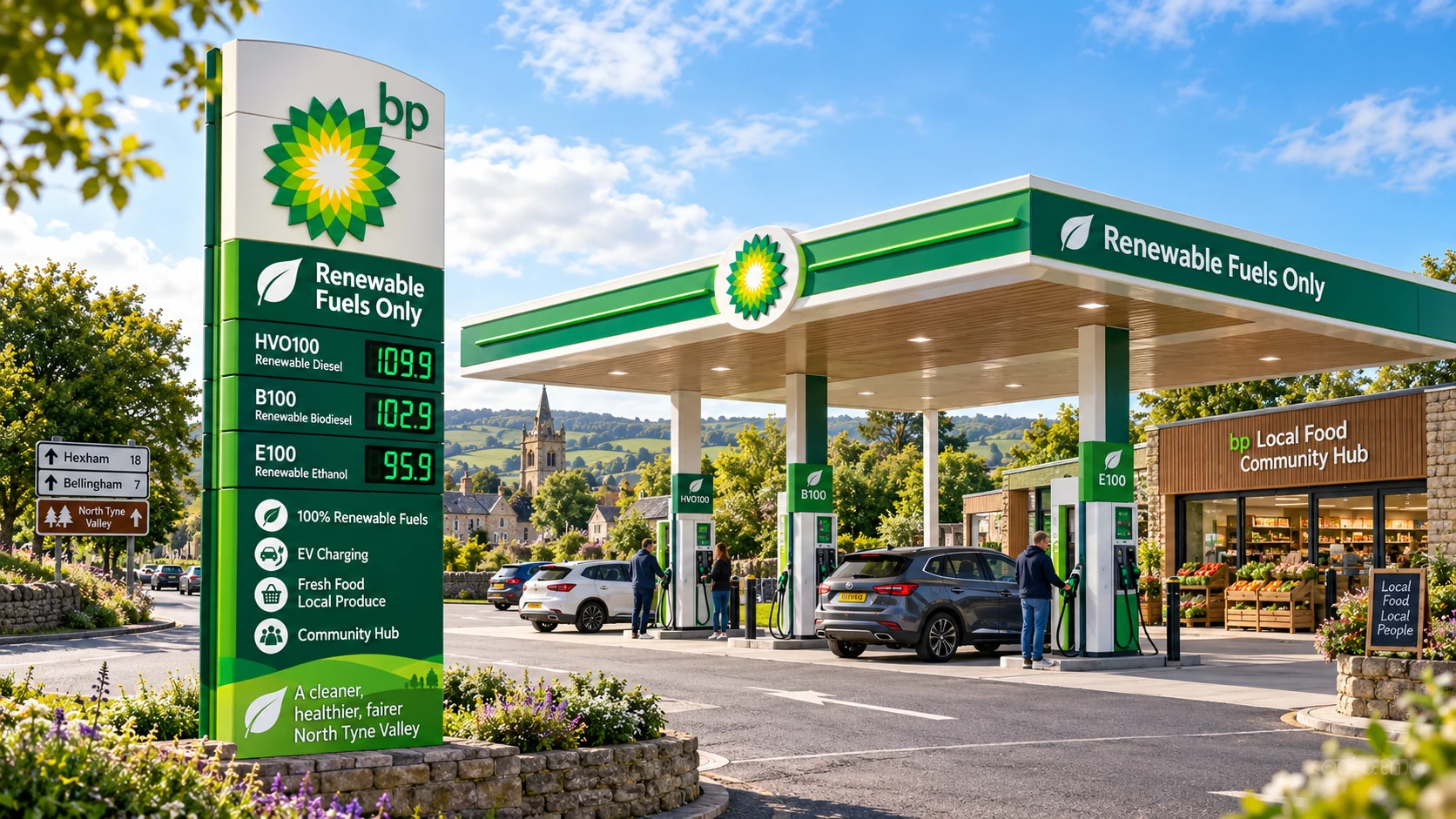
Rather than closing them, the village filling stations become some of the places in the territory to refuel — 100% renewable fuels. That way nobody has to take anyone's word for it: there simply is no fossil fuel to buy in the corridor.
Concept price board shown: HVO100 109.9p/L, B100 102.9p/L and E100 95.9p/L. These are illustrative project-subsidised prices for the concept, not current BP retail quotations; supply, tax treatment and vehicle compatibility would have to be confirmed before launch.
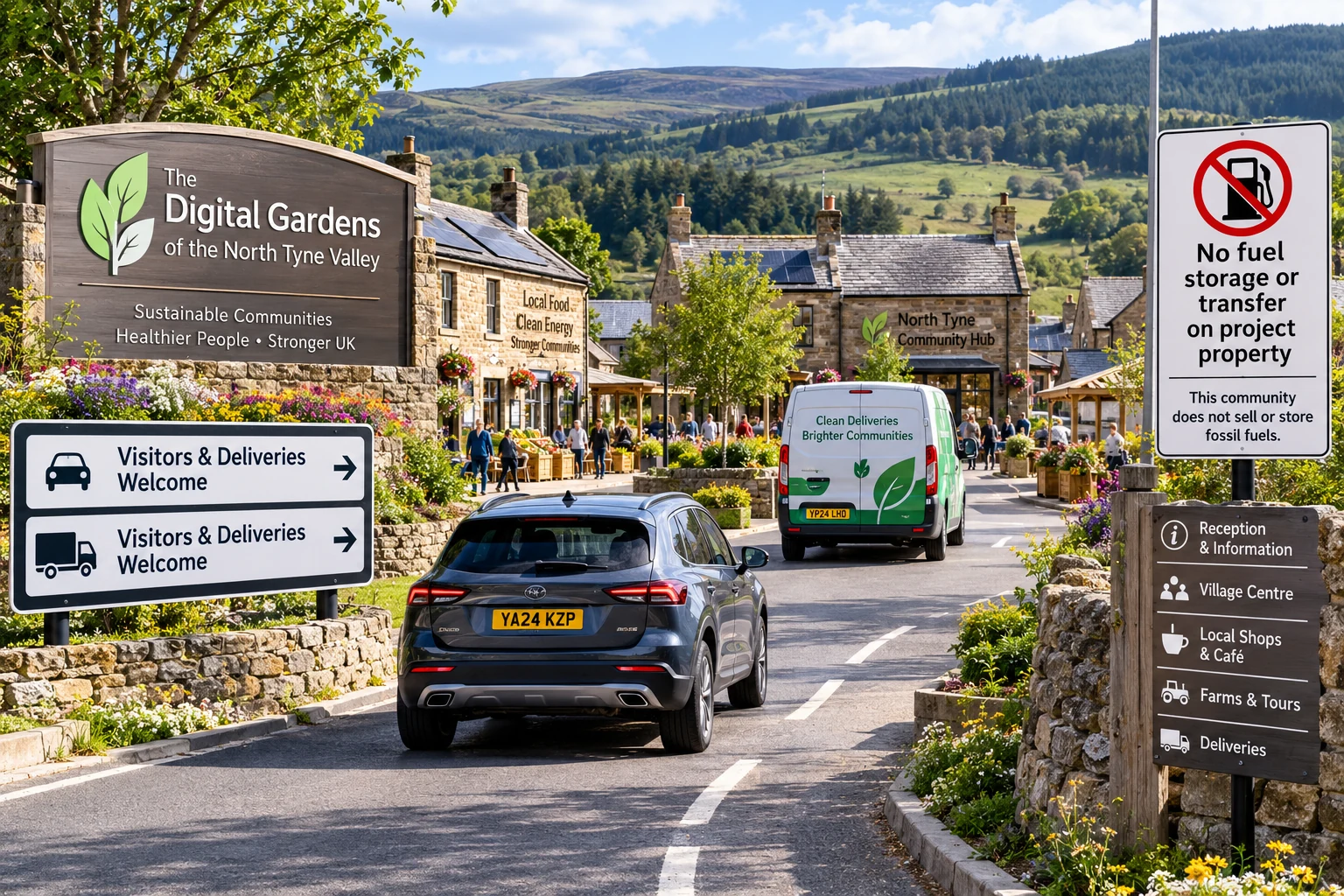
The covenant does not prevent normal access by visitors, suppliers, or delivery vehicles. They may enter and leave the community with petrol or diesel that remains inside the vehicle’s fuel tank throughout the visit or delivery.
On properties that have agreed to the covenant, a visitor or supplier may not leave fossil fuel behind, store it, sell it, or deliver or otherwise provide it to residents. Fuel in the vehicle must remain in the vehicle and leave the community with it.
Because it almost never needs to be. With free charging at every site and up to 550 km of real range, most journeys need no combustion engine at all. Hybrids go to households with a demonstrated need — towing, long distances, veterinary rounds — plus a small shared pool for everyone else.
The fuels and infrastructure described here depend on supply agreements and on conversion works at the filling stations that have not yet been contracted.