
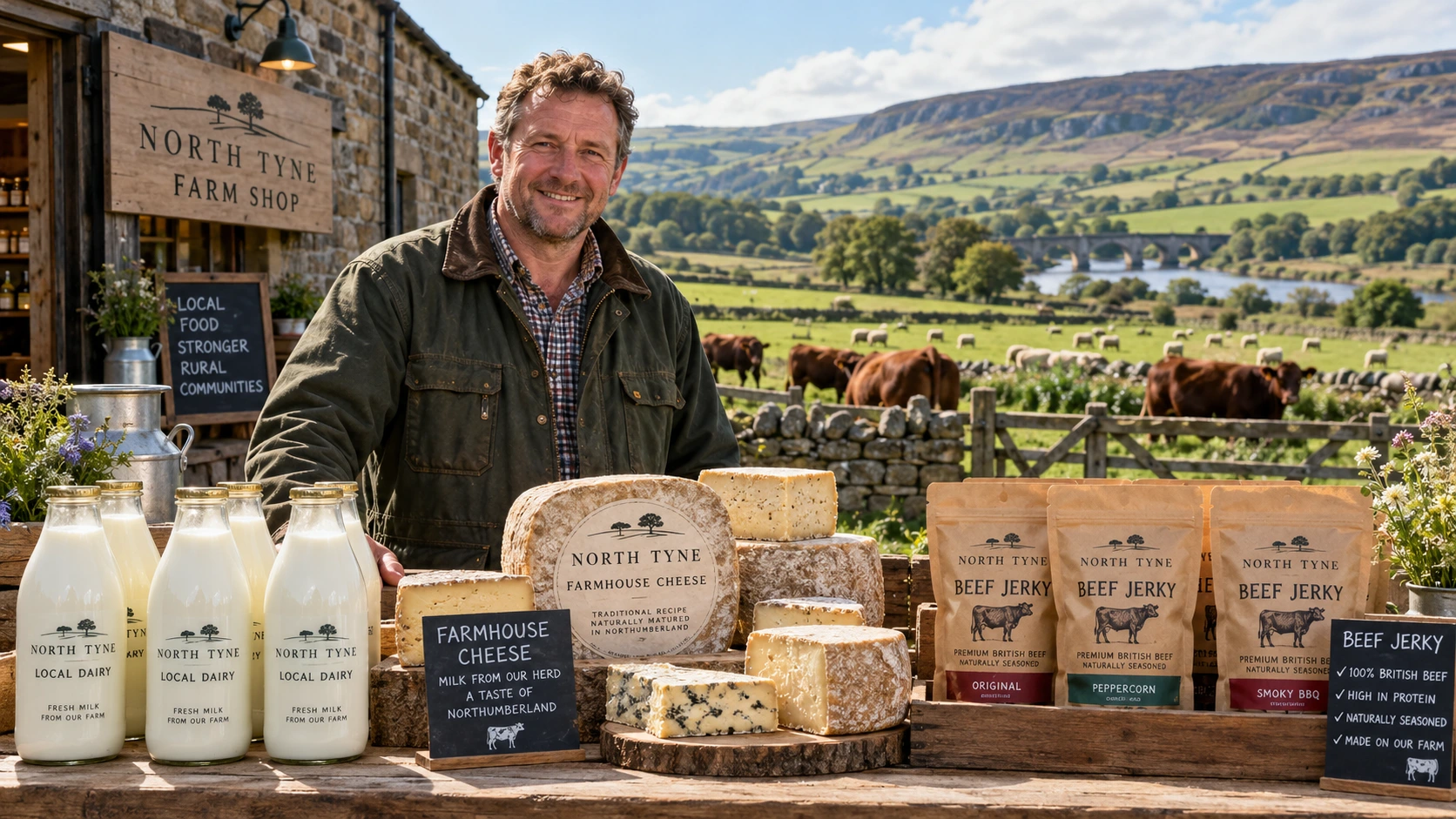
Local Farmers Prosper
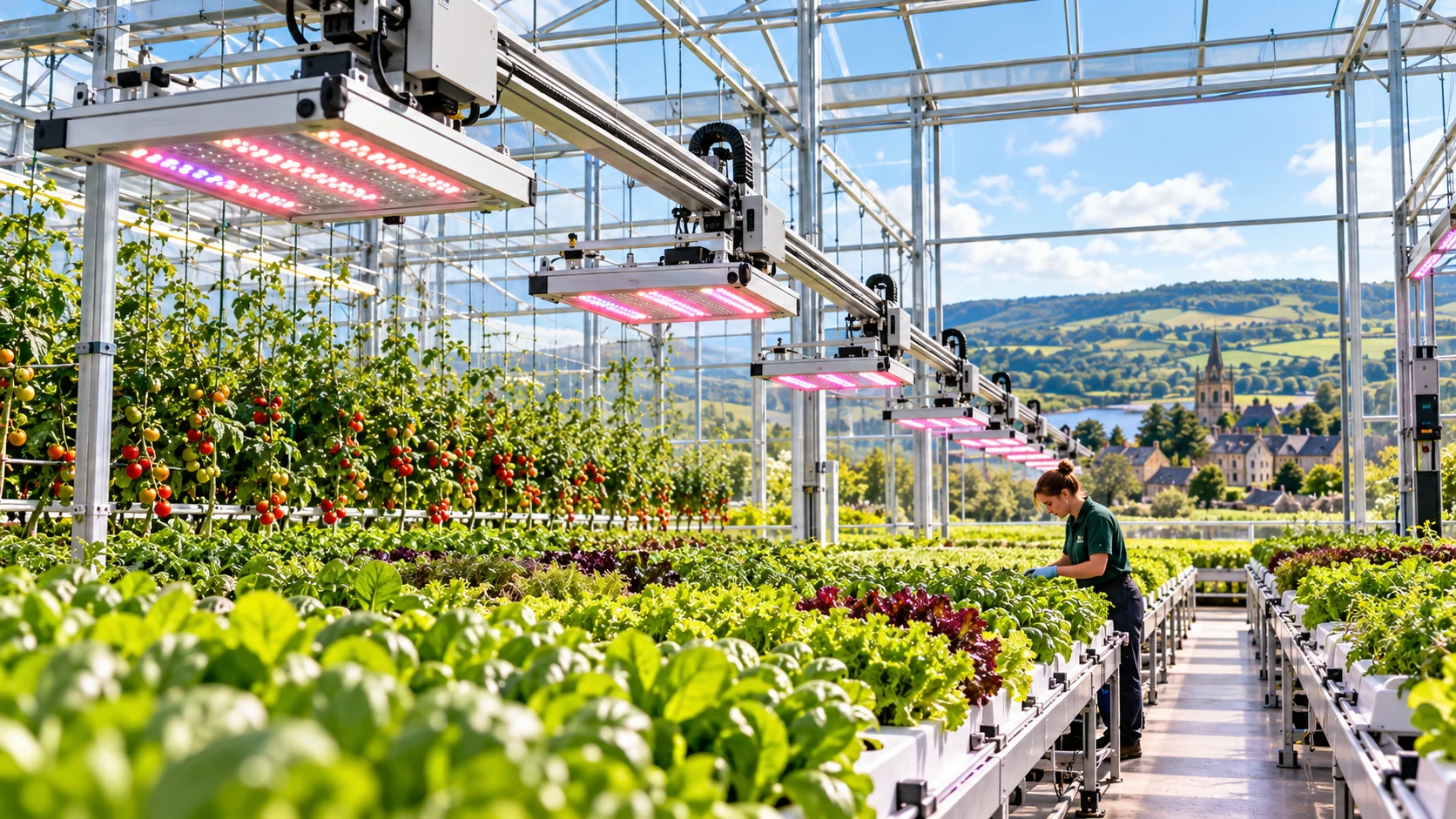
The North Tyne farming base is most realistically built around sheep, beef cattle and grass-based forage. The project adds value through grass-and-clover pasture, hay and silage, renewable energy, biogas, protected horticulture, local processing and farmer-owned products; lucerne is treated only as an optional crop for suitable free-draining fields.
The V8 workbook uses explicit pounds-sterling processing scenarios with editable British farm inputs. The lucerne examples below are retained as legacy context; they are not included in the V8 central case or its headline carbon result.
What local farmers mostly produce
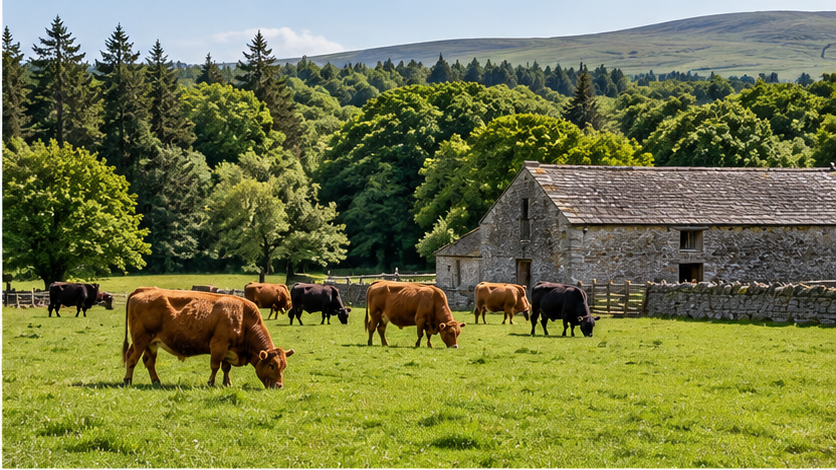
For the upper North Tyne landscape, the most credible agricultural foundation is grazing livestock rather than large areas of lucerne. Sheep and beef cattle dominate the upland character, with grass pasture, clover-rich leys, hay and silage providing the core feed. Better and lower ground can also support cereals and other crops, while dairy, eggs, potatoes, roots and seasonal vegetables can come from participating farms across the wider Northumberland supply area.
Illustrative England farm-processing margins
The beef and dairy cases remain useful planning scenarios. The first and fourth cards are inherited lucerne scenarios and are shown for transparency, not as the recommended North Tyne land-use base case.
Version 8 uses UK electricity and natural-gas factors and an editable 24.5 MW schedule. Livestock, land, community heat-demand and participating farm inventories still require local validation.
Complete Northumberland physical model · ZIP24.5 MW of computing, useful heat and measurable operational carbon savings
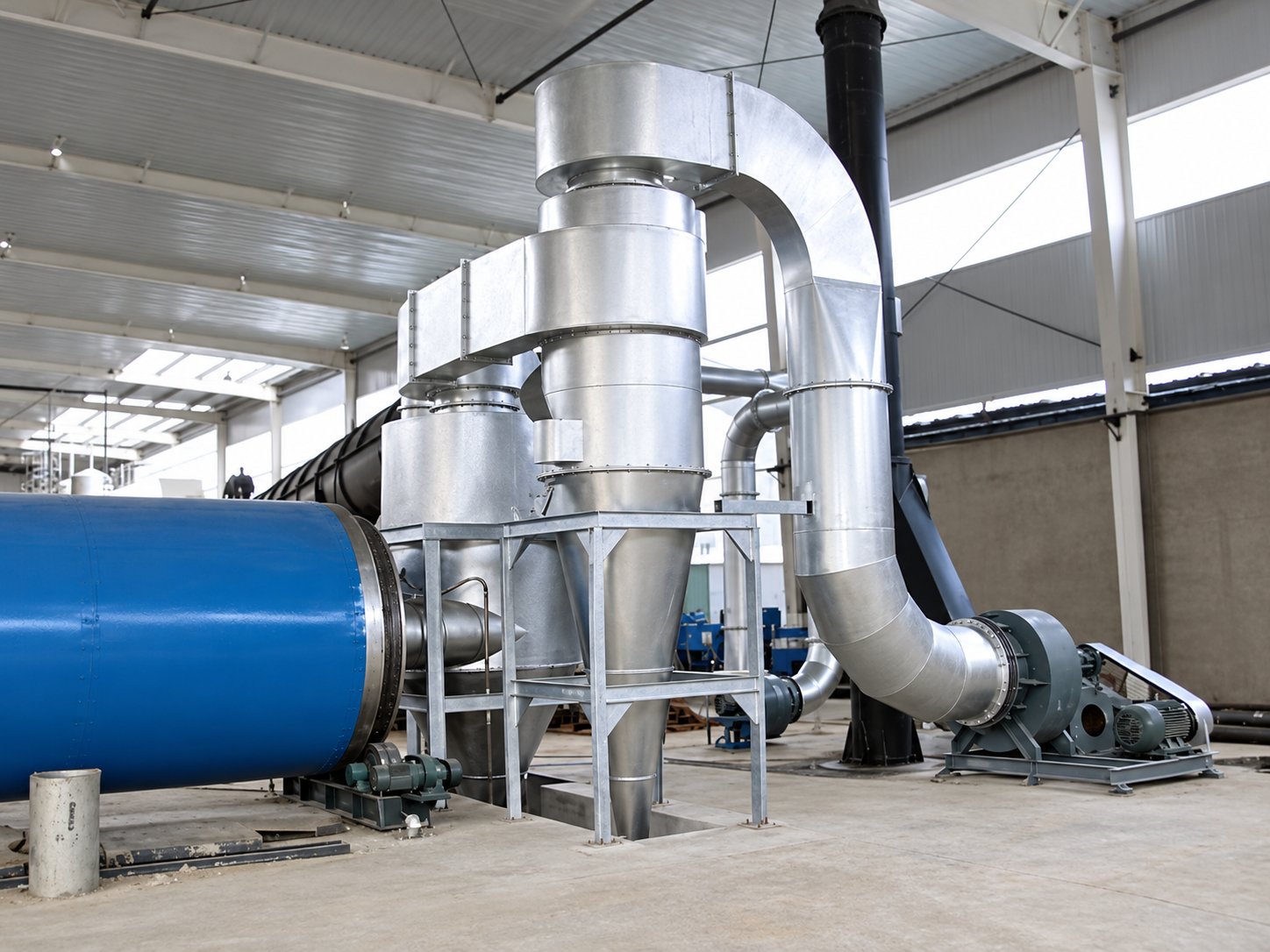
The model compares the same IT workload and useful heating service in two systems: a conventional data centre plus separate gas boilers, and the North Tyne network using recovered heat and renewable electricity.
The central screening case assumes 90% average IT load, PUE 1.15 versus 1.45, 85% heat capture, annual use of 50% of captured heat, and 90% hourly matched renewable electricity. It includes heat-network pumping. Project electricity demand is 223.8 GWh/year, including 22.4 GWh/year of unmatched grid imports. The comparator emits 53,308 tCO₂e/year; the project emits 2,931 tCO₂e/year.
These are operational Scope 1 and 2 screening predictions, not a verified whole-community lifecycle reduction. Food, livestock, household transport, construction and equipment manufacture are outside the headline boundary. Annual wind-and-solar output is separately modelled at 303.5 GWh; annual surplus does not prove hourly renewable coverage and earns no export credit.
UK factors: DESNZ 2026 greenhouse-gas conversion factors. All engineering assumptions remain editable.
A local circular agricultural chain
The goal is not simply to raise more cattle. Economics improve when feed, energy, fertiliser, processing and branding stay close to the farmer. In the North Tyne base case, cattle and sheep rely primarily on grass pasture, clover-rich leys, hay and silage. Biogas turns manure and residues into energy, digestate returns nutrients to suitable fields, and recovered heat can support crop or forage drying where it is useful. Lucerne remains an optional trial crop only on suitable free-draining land.
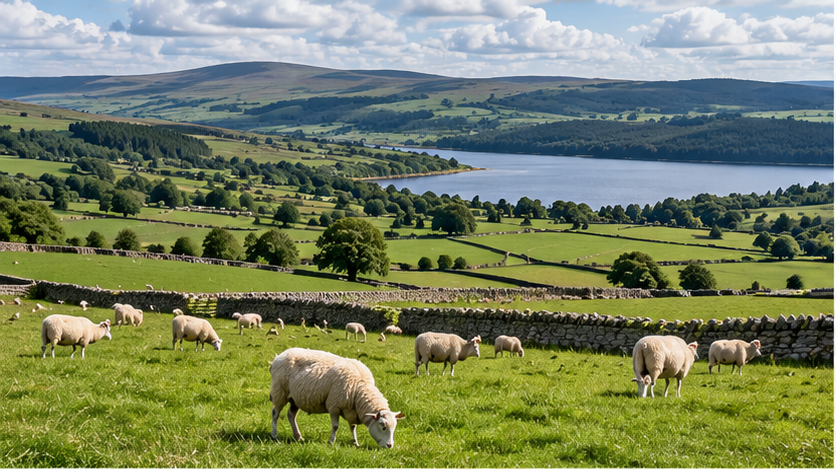
Grass, clover, hay and silage first — lucerne only where the land suits it
For most North Tyne cattle and sheep, the primary forage should be permanent or rotational grass, clover-rich leys, conserved hay and silage. Lucerne can still be tested as a high-protein supplementary crop on suitable free-draining fields. The inherited model's 24.3 kg CO₂e/t transport saving applies only to its specific 300 km-to-30 km lucerne transport scenario and is retained here for transparency; it is not applied to locally grazed grass.
Cattle methane: the biggest climate lever
In the beef model, enteric methane represents about half of the reference footprint. The current design mainly reduces manure, energy, feed, fertiliser and transport, giving about 34.3% lower beef footprint. In the future maximum, near-98% enteric reduction combined with the rest of the system takes total beef footprint to about 91.5% lower — up to 92%. For cheese, the model moves from about 53.8% lower in the design to about 88.0% at the future maximum.
Video: why reducing enteric methane matters
Methane-reducing supplements and future red-seaweed research
In addition to improvements in manure, energy, fertiliser, transport and drying, the project includes a specific strategy to reduce enteric methane, one of the largest components of the carbon footprint of cattle.
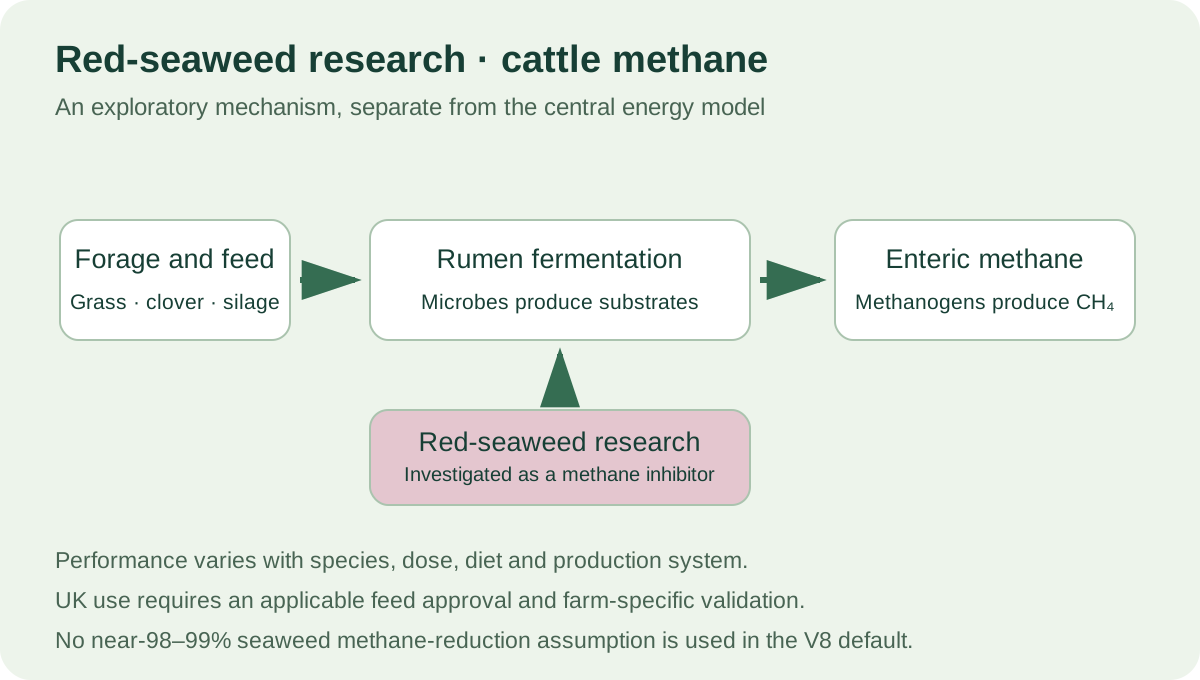
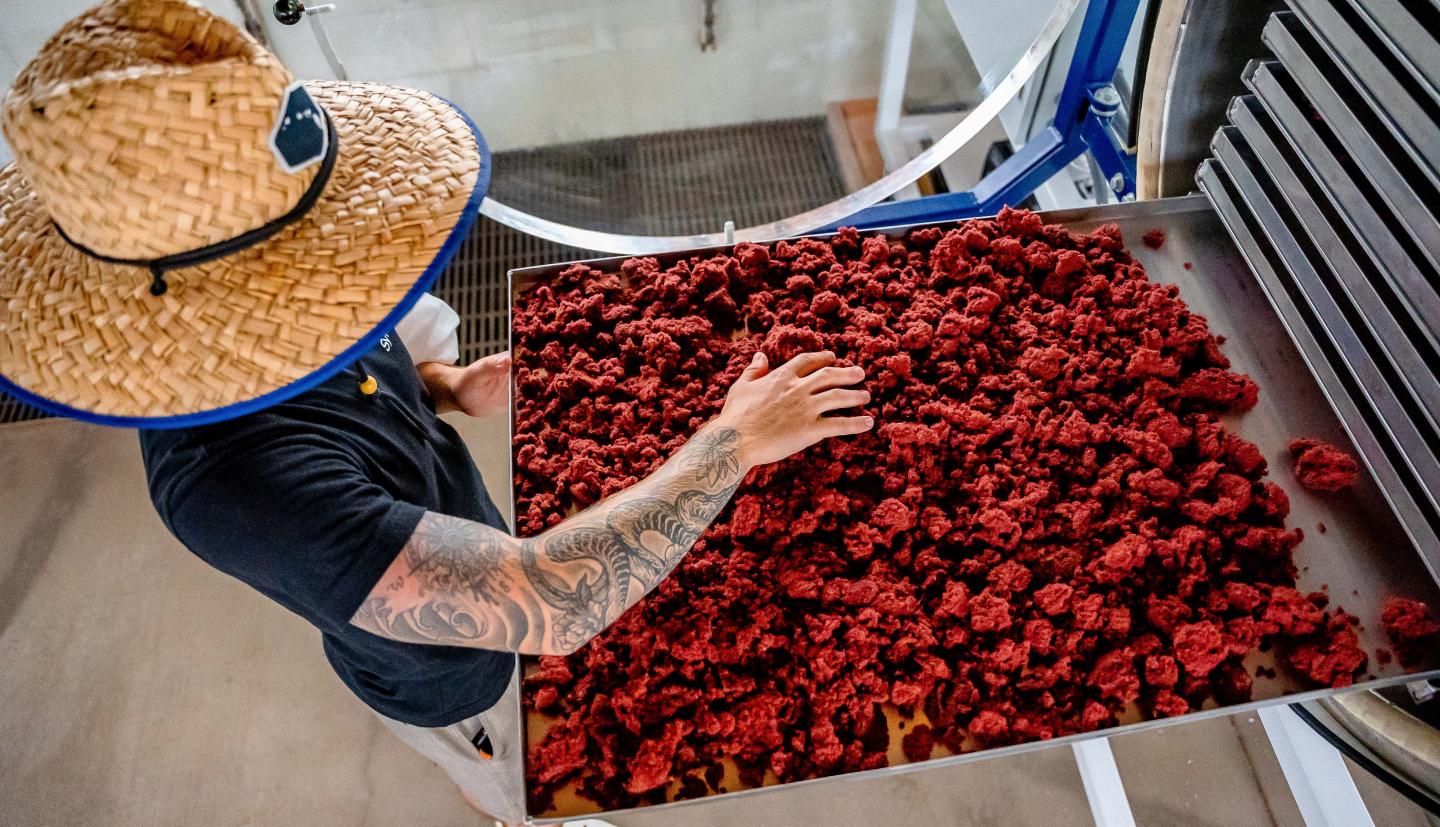
Food Standards Agency — current Great Britain 3-NOP authorisation
Farmers earn more when they also own the finished product
Jerky, cured ham and cheese convert local raw materials into light, durable, higher-value products. A regional farmer-owned brand keeps a much larger share of processing and retail margin in the local economy.
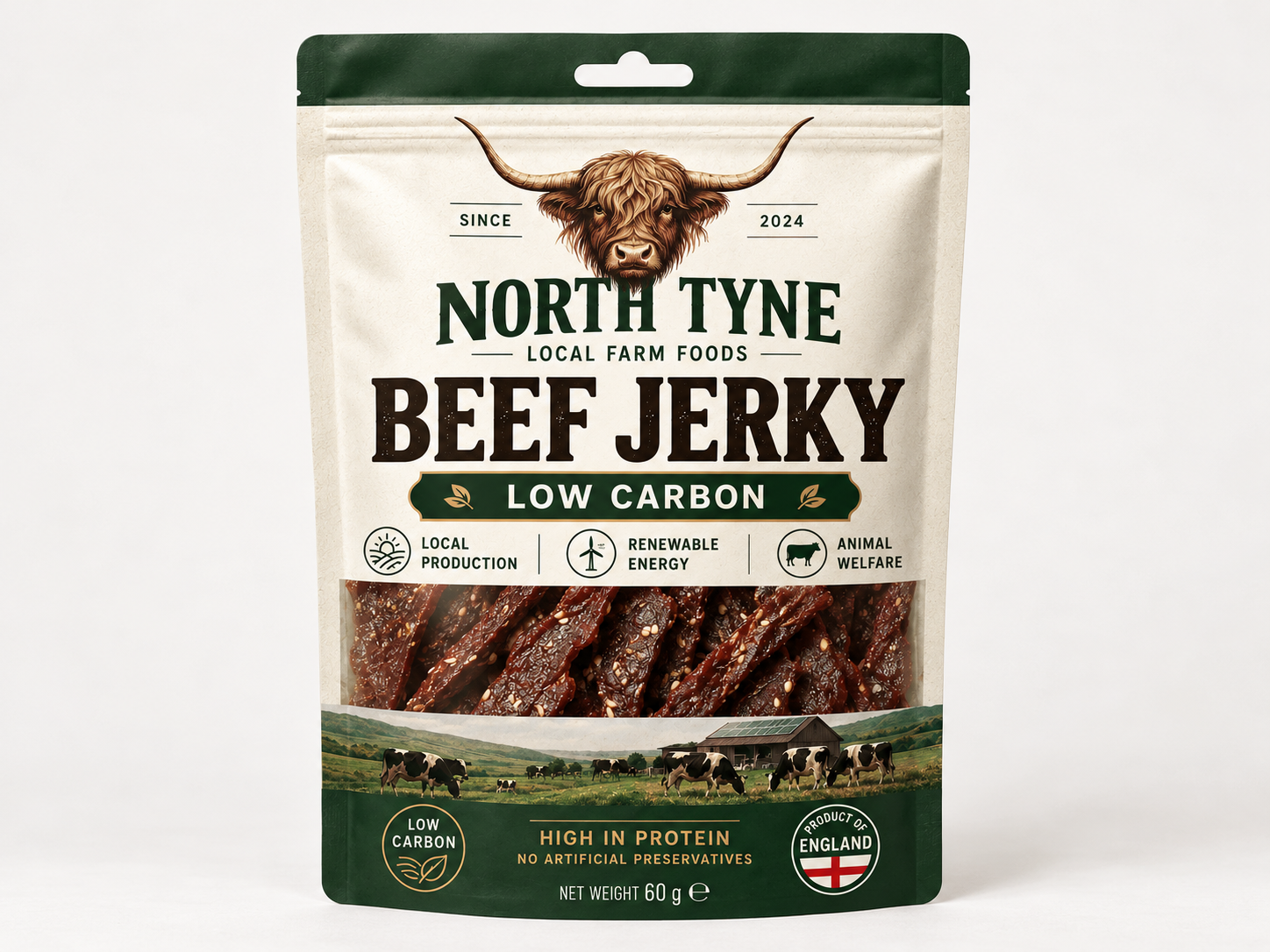 LOW CARBON
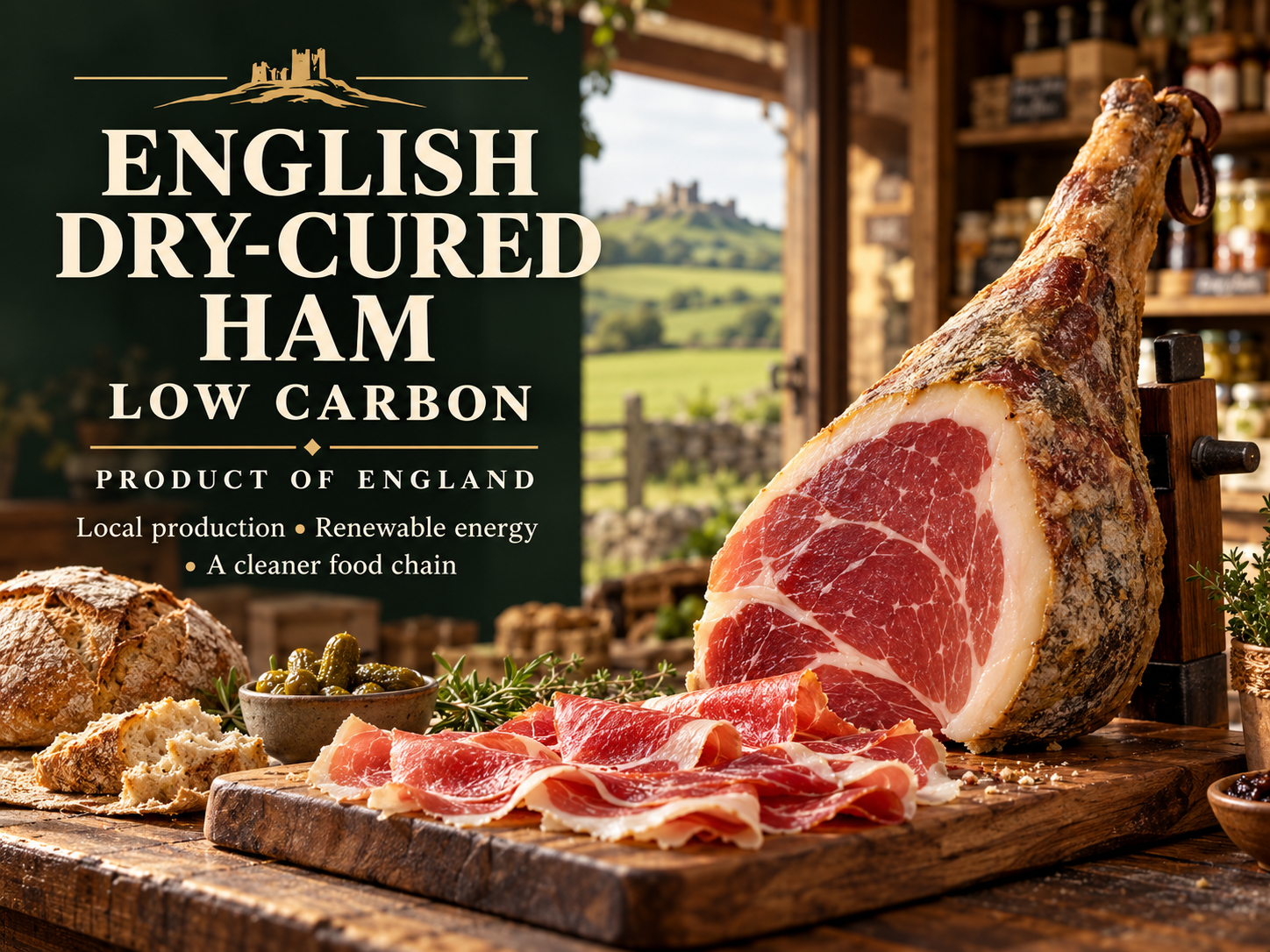 LOW CARBON
 LOW CARBON
Global market, local production
Jerky has a very high value-to-weight ratio and can sell through e-commerce, gourmet retail, fitness, hiking, airports and distributors. Cheese and cured products add another export route. The margin model assumes the farmer or cooperative retains an ownership share in the brand and processing.
Main calculation bases
The figures on this page are linked to the downloadable physical model and the agricultural, energy and food references used to build its assumptions.
- Northumberland National Park — farming and grazing landscape
- Tarset — local sheep and cattle farming
- Defra — North East agricultural facts
- AHDB — growing and feeding lucerne in Britain
- UK Government — Agriculture in the United Kingdom
- Defra — farming and food
- AHDB — agriculture and livestock
- PLOS ONE — Asparagopsis in beef steers
- Journal of Animal Science — Asparagopsis bioactives
- Foods — consumer research on carbon-footprint-labelled beef
- Community carbon physical model