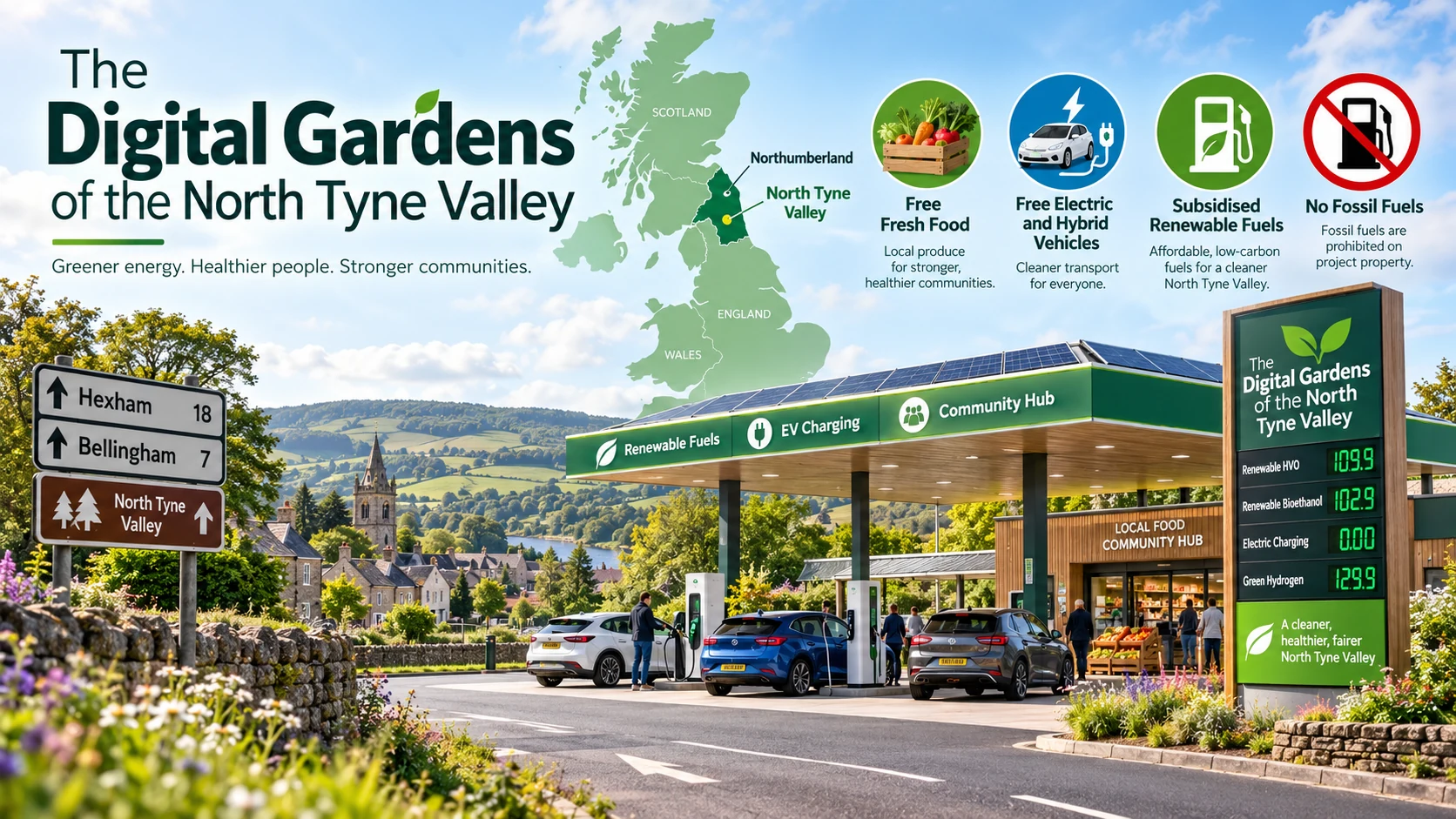
North Tyne Valley concept overview: free fresh food, community electric/hybrid vehicles, subsidised renewable fuels and no fossil-fuel storage, sale or transfer on project property.
Six proposed rural data-centre nodes would connect Kielder, Falstone, Tarset & Greenhaugh, Bellingham, Wark and Humshaugh & Chollerford, with Hexham as the southern infrastructure gateway. Recovered heat would support greenhouses, recirculating aquaculture, district heating and crop drying.
The proposal links computing revenue to practical household benefits: food, mobility and affordable renewable energy, alongside a private covenant that removes fossil-fuel sale, storage and transfer from project property.
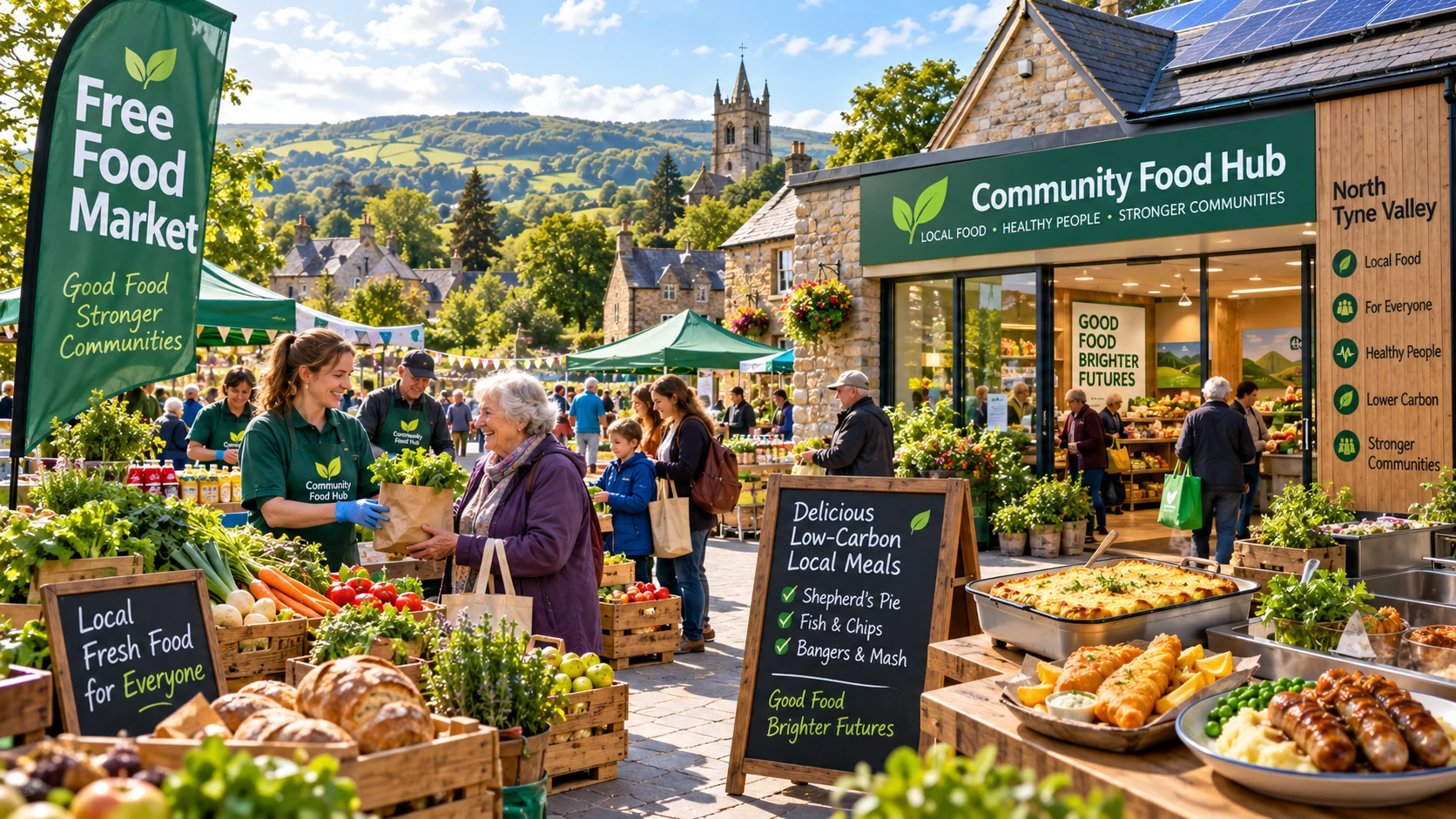
Year-round local vegetables, fruit, bread and low-carbon British meals, supported by recovered data-centre heat and renewable electricity.
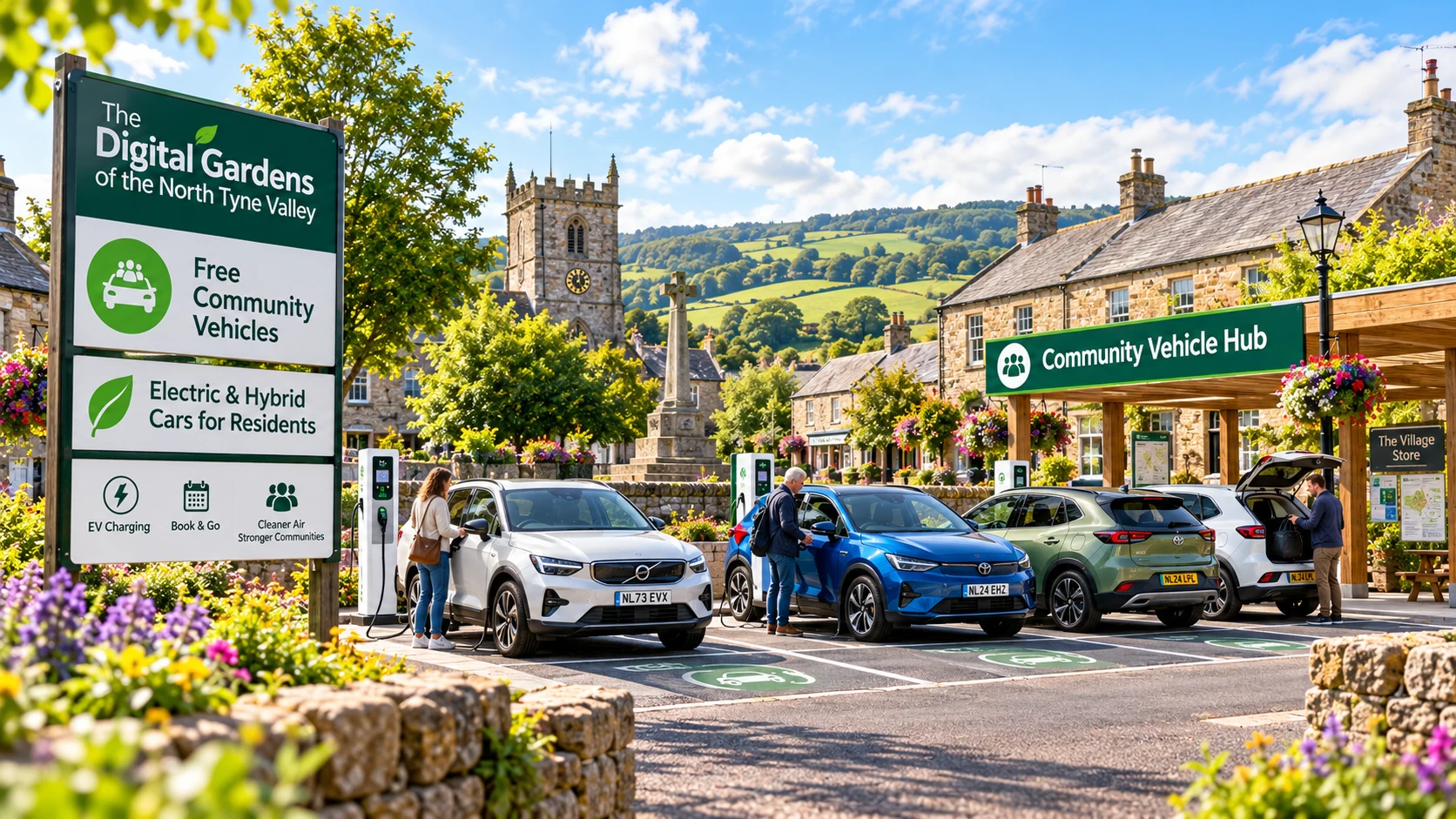
A proposed resident vehicle programme centred on electric and plug-in-hybrid cars, village charging and shared mobility.
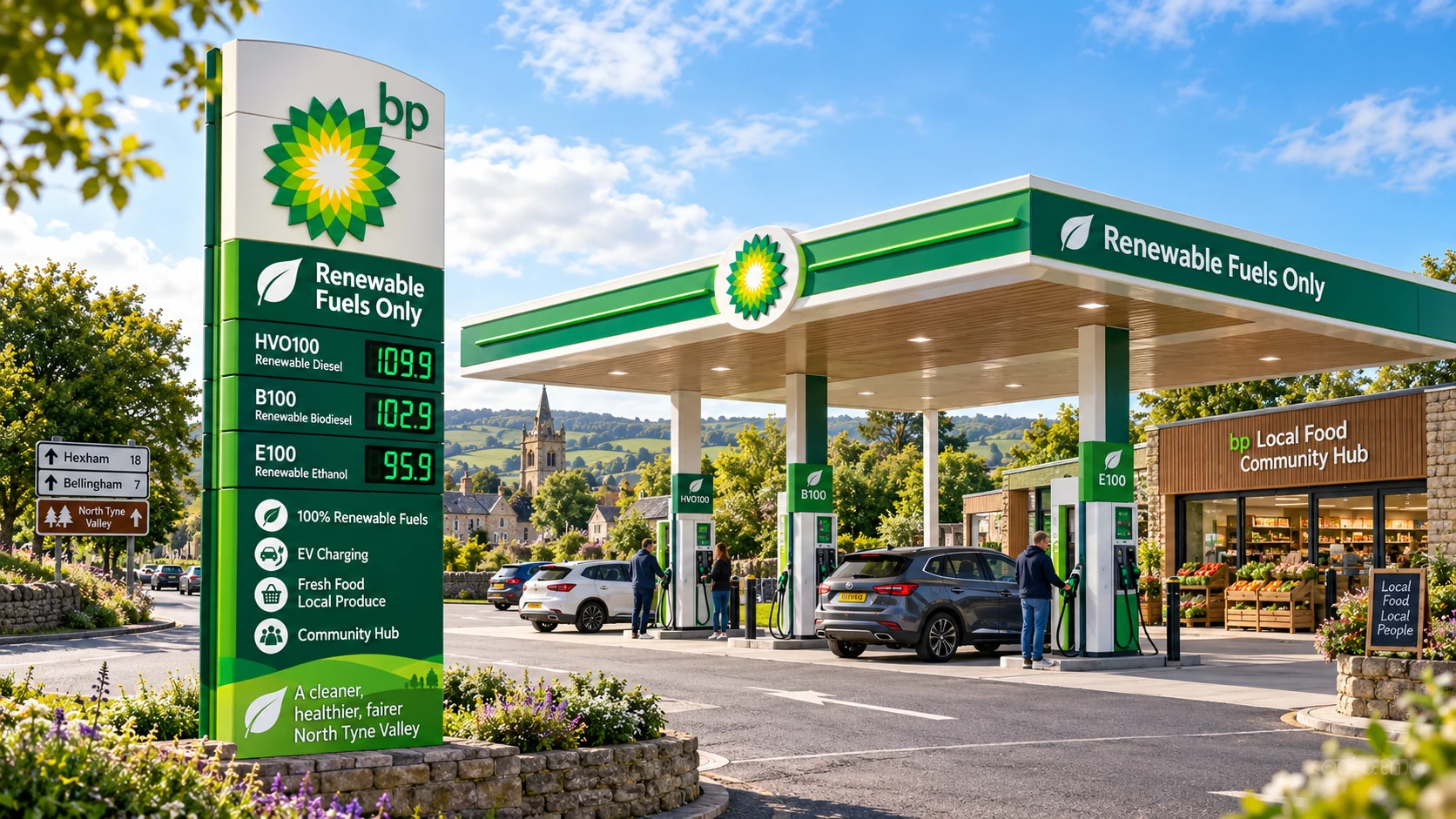
Renewable-only filling points for vehicles and machinery that still require liquid fuel; displayed prices are illustrative project-subsidised prices, not current BP retail quotes.
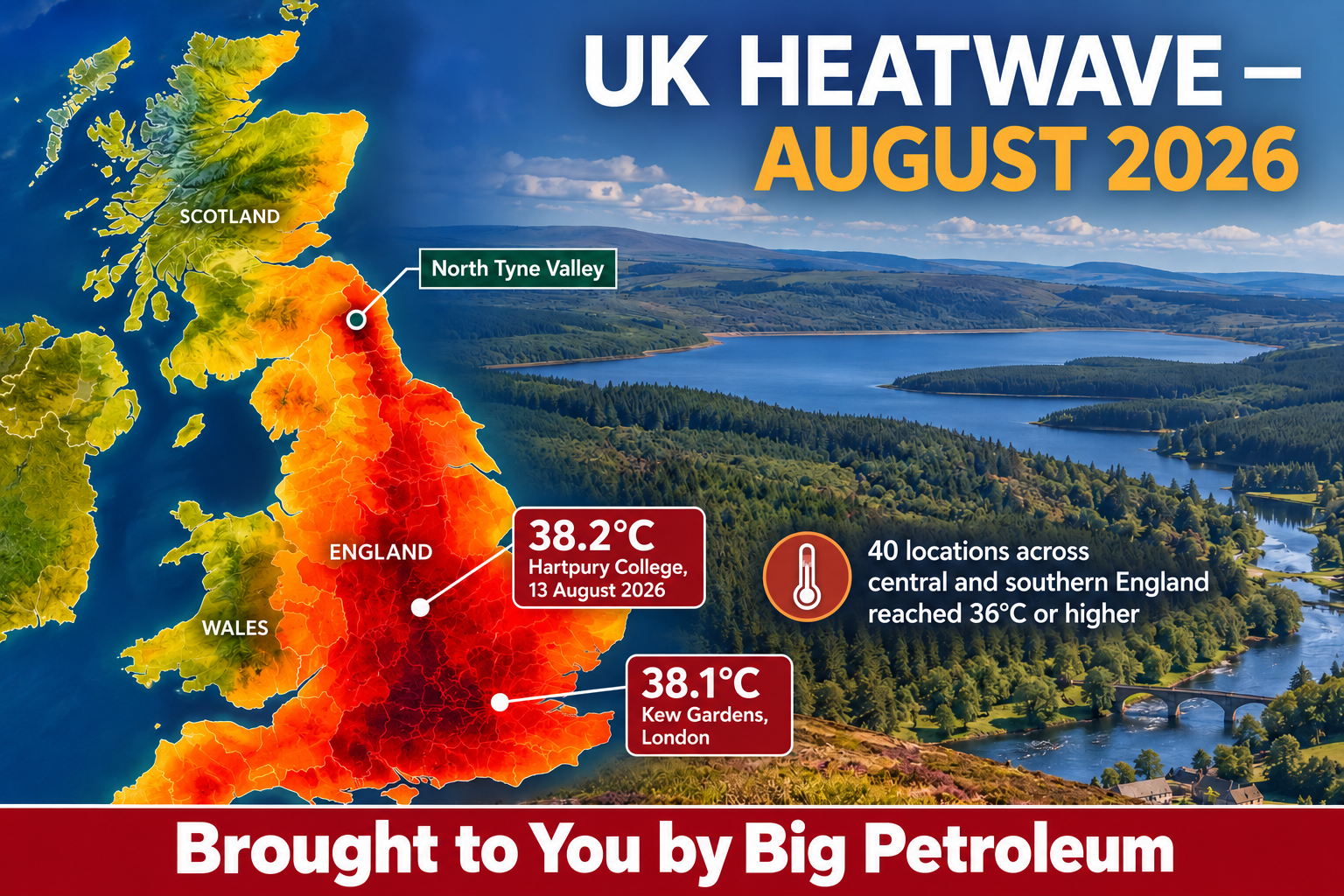
Source: UK Met Office, 2026
The public screening model distributes illustrative capacity across six communities while leaving grid access, water, heat demand, land, fibre and planning as engineering variables.
The capacities are screening values for comparing towns. Grid, water, heat grade, land, fibre, noise and permits must be studied before any site is fixed.
The model compares the same IT workload and useful heating service in two systems: a conventional data centre plus separate gas boilers, and the North Tyne network using recovered heat and renewable electricity.
The central screening case assumes 90% average IT load, PUE 1.15 versus 1.45, 85% heat capture, annual use of 50% of captured heat, and 90% hourly matched renewable electricity. It includes heat-network pumping. Project electricity demand is 223.8 GWh/year, including 22.4 GWh/year of unmatched grid imports. The comparator emits 53,308 tCO₂e/year; the project emits 2,931 tCO₂e/year.
These are operational Scope 1 and 2 screening predictions, not a verified whole-community lifecycle reduction. Food, livestock, household transport, construction and equipment manufacture are outside the headline boundary. Annual wind-and-solar output is separately modelled at 303.5 GWh; annual surplus does not prove hourly renewable coverage and earns no export credit.
UK factors: DESNZ 2026 greenhouse-gas conversion factors. All engineering assumptions remain editable.
Northumberland remains cooler than southern England, but warmer and drier summers increase the value of resilient water systems, efficient buildings and local food production.
The bottom of the page now highlights two of the most visible community moments: cleaner shared transport and celebratory public events.
Participating residents would gain access to cleaner transport options designed to reduce household costs and improve mobility across the valley.
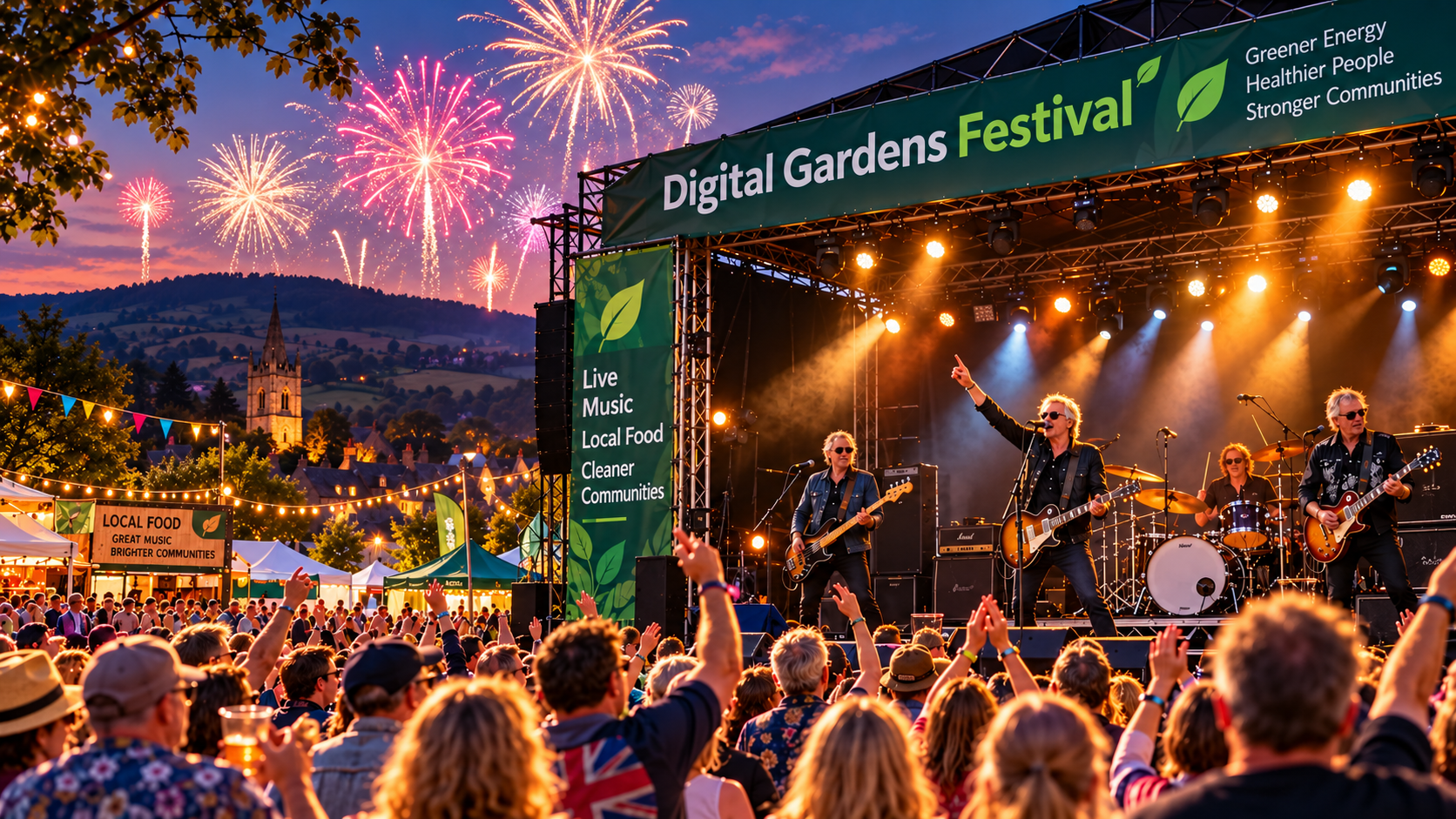
Live music, a strong local-food offer and community celebration can help attract visitors while bringing residents together.
V6 adds an English screening plan for a Bellingham / River North Tyne campus, based on the supplied site-plan concepts but redesigned for Northumberland. It includes the rural data centre, high-tech greenhouse, recirculating aquaculture, solar, biogas, dry cooling, thermal storage, community vehicles and a protected river buffer — with no mill.
The location is illustrative and remains subject to land, planning, flood, grid, fibre, ecology and Environment Agency review.
View the V8 site plan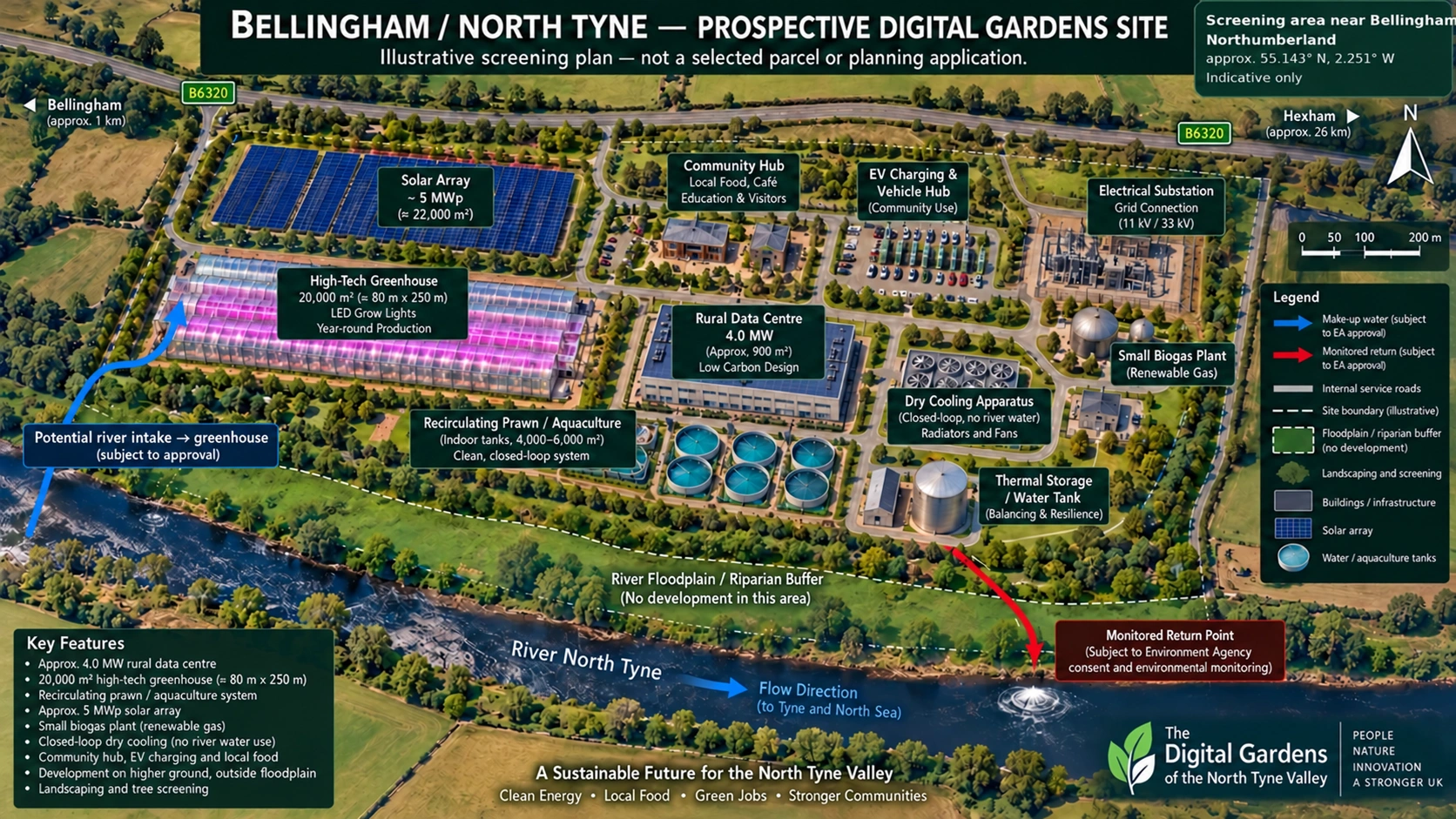
Each proposed data centre is deliberately rural-scale. Liquid cooling captures server heat instead of throwing it into the air; that heat is then matched to greenhouses, aquaculture, district heating, water pre-heating and agricultural drying.
The network is a community-development model, not simply a collection of server buildings. Revenue from computing is intended to finance shared infrastructure and practical household benefits while the valley reduces fossil-fuel dependence.
Learn more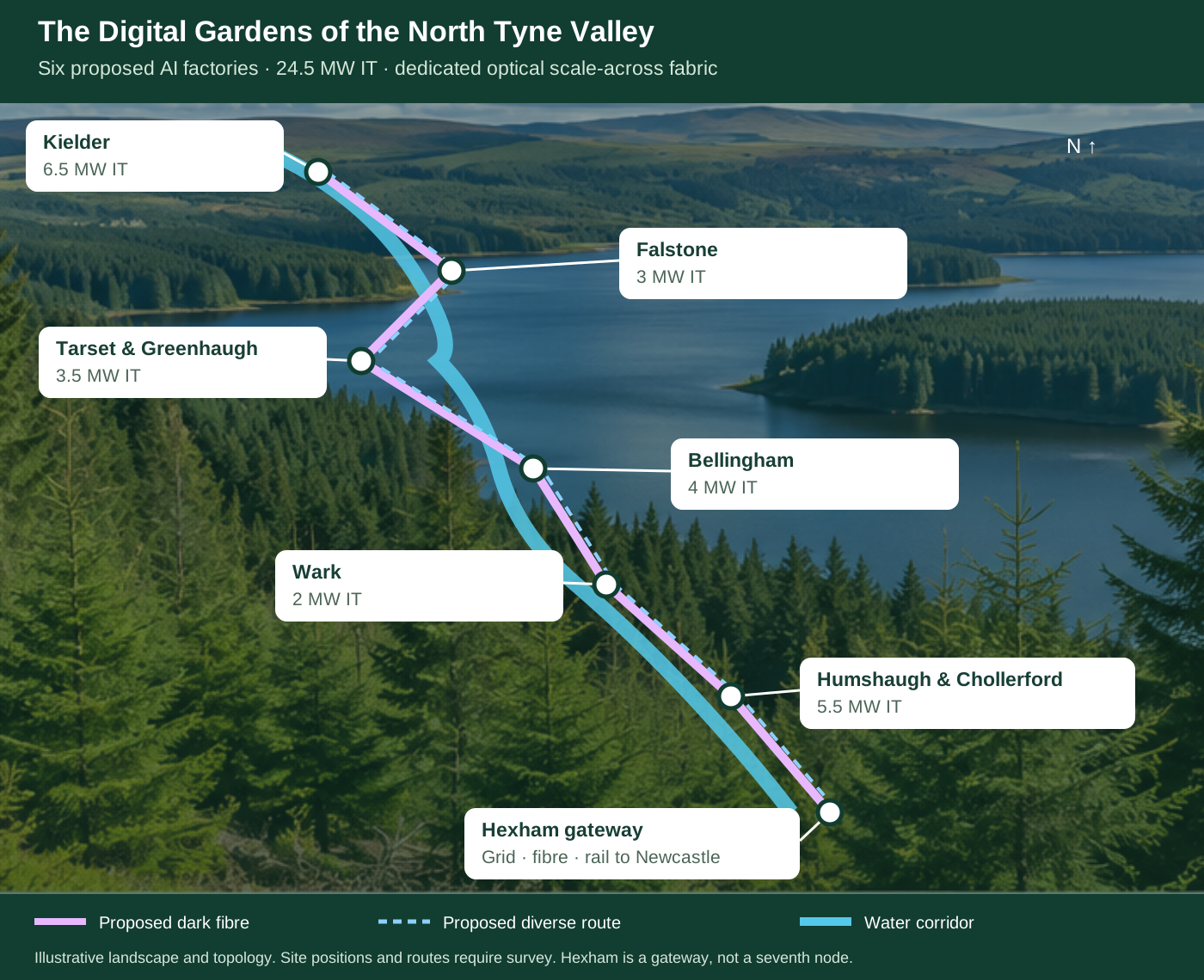
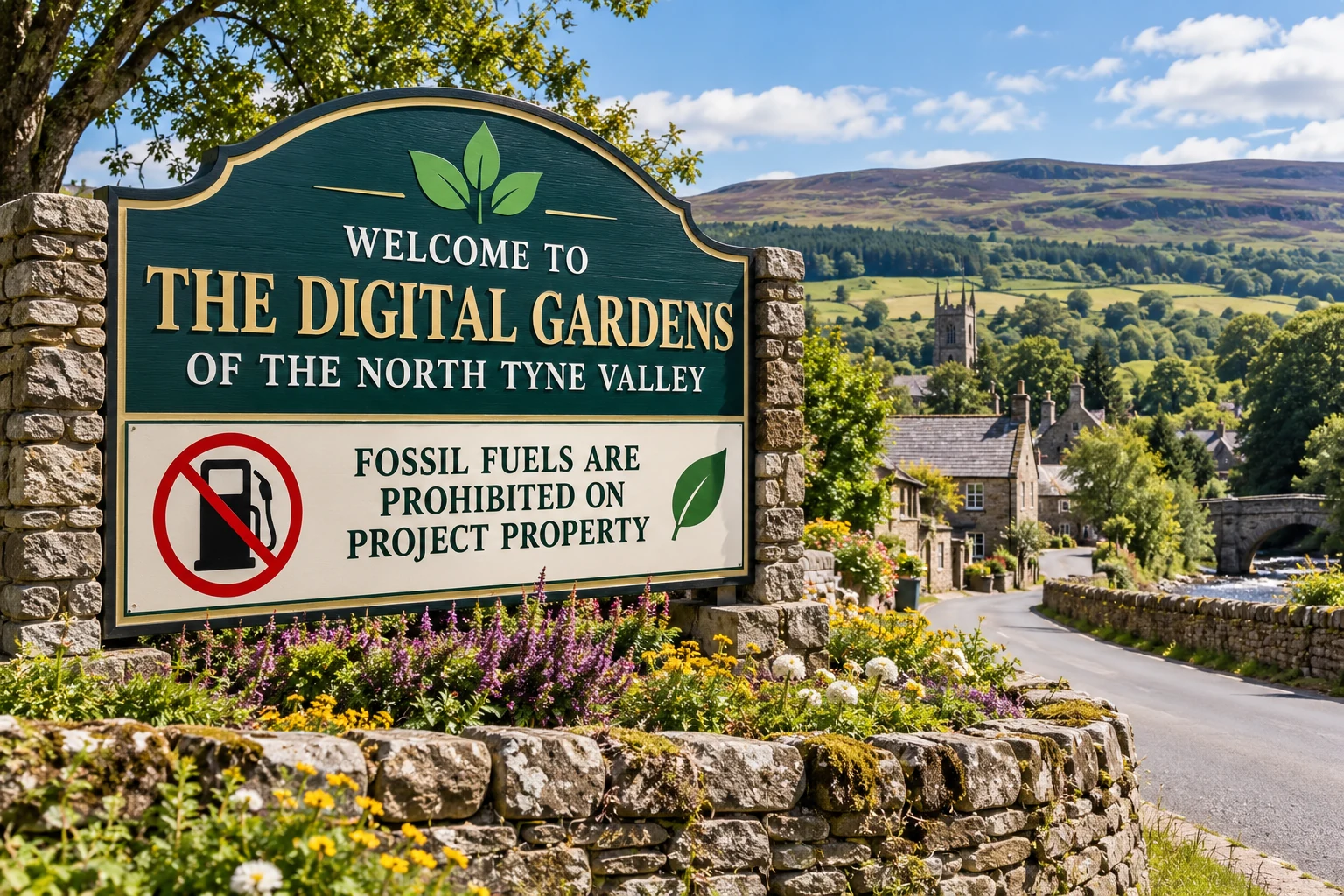
The resident covenant is a private contract between each resident and the cooperative — not a municipal law — so no town hall can impose it or repeal it.
Learn moreA proposed multi-day launch festival would celebrate the valley, explain the technology and invite major British and international artists. No artist is presented as booked until a contract is signed.
View the proposed festival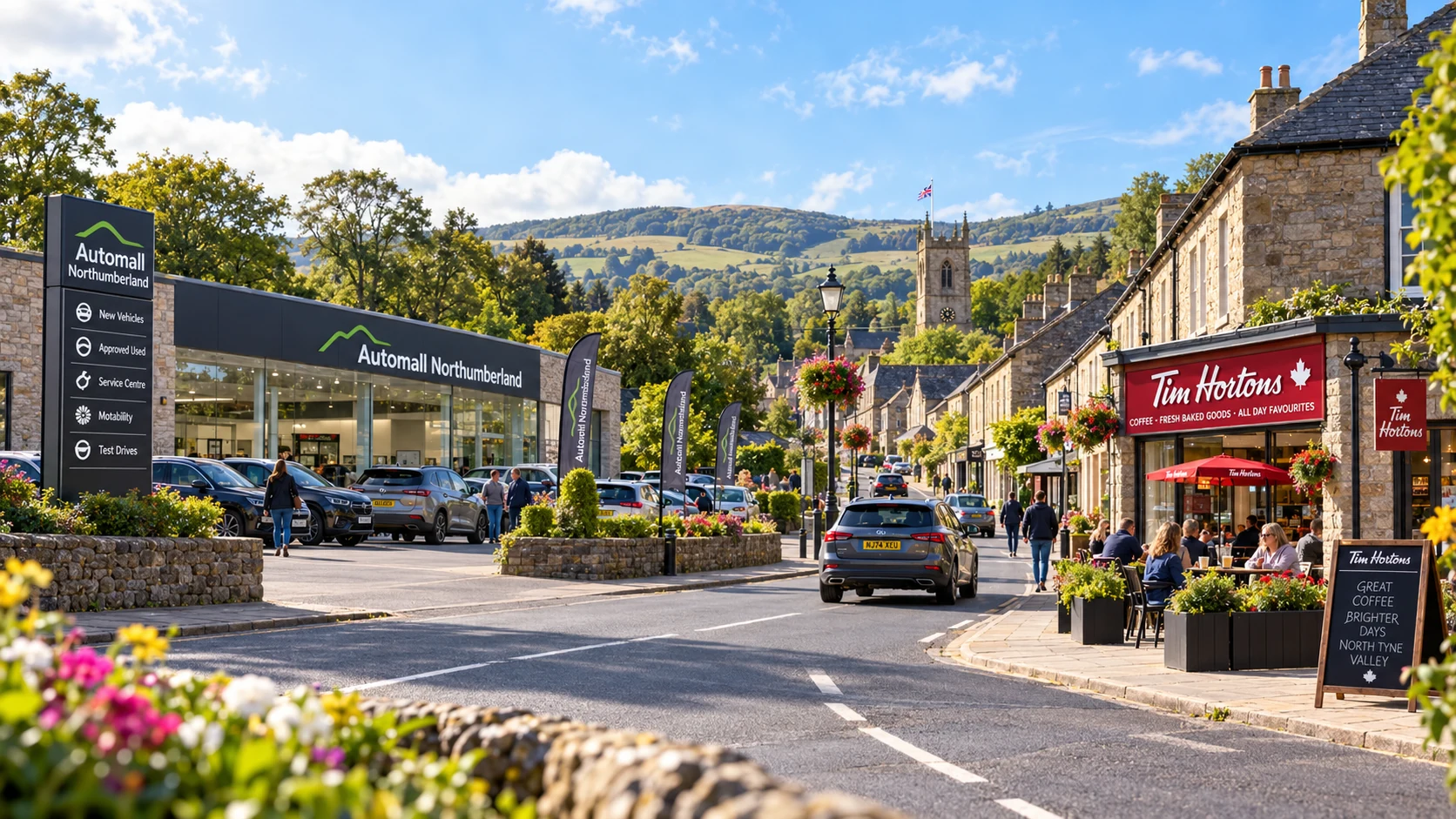
Farm shops, pubs, cafés, bakeries, accommodation providers, garages and contractors should benefit from the new demand rather than be displaced by it. Procurement and transition plans would be developed with each community.
See howTell us which community, home, farm or business you are connected with and we will keep you informed as the concept develops.
Go to the formThe Digital Gardens aims to demonstrate that geographically distributed AI factories can deliver useful computing while returning server heat to local food production and communities, setting a new standard for data centres.
NVIDIA Spectrum-XGS Ethernet extends Spectrum-X with scale-across networking to connect multiple data centres into a unified AI factory. The proposed dedicated dark-fibre optical fabric would carry that traffic between the six North Tyne nodes; dark fibre is the physical carrier infrastructure, while NVIDIA supplies the networking technology.
The project would test distributed inference and training, collective-communication performance, end-to-end latency, bandwidth, resilience, heat use and carbon performance. Making conventional mega data centres obsolete is the demonstration goal. It has not yet been established by this proposed project, and no NVIDIA partnership or endorsement is implied.
NVIDIA Spectrum-X and Spectrum-XGS · NVIDIA technical explanation of scale-across networking